#42. EdTech Stack Review 2025-26: What Changed, What Stayed, and What Stuck

This time last year, I published my usual End-of-Year EdTech Tier List for 2024-25, breaking my tools into five tiers:
- Core Workflow (daily essentials)
- Regular Workflow (weekly staples)
- Project Workflow (PBL and special resources)
- Support Workflow (occasional helpers)
- Experimental Workflow (tools I was still testing)
The exercise helped me see what was actually embedded in my practice versus what was just noise.

A year on, the structure still holds. Most of my stack hasn't shifted dramatically — Google Workspace remains the backbone, Padlet and Kahoot still do heavy lifting, and the iPad is still my primary device. But some new tools have moved to the centre of how I work, and they deserve their own mention.
So, what's new?

Kimi 2.6
Last year, I knew nothing of Kimi. This year, it's straight into both my project workflows and also core workflow. I reach for Kimi first when designing anything complex — not just lesson plans, but full platforms. The clearest example is New Horizon Island, an AI simulation world I built for my P6 students using Kimi to generate the citizen prompts, dialogue logic, and iterative design. K2.6 can architect a functioning backend, refine tRPC endpoints, and troubleshoot deployment issues on Render. For a non-coder building EdTech products, that's not a small thing. It's now my default for anything that requires sustained reasoning, technical problem-solving, or multi-step project design. Building micro-apps for students has become a doddle!
Final Cut Pro / Apple Creator Studio
Another shift is in video production. I've moved from Filmora Wondershare to Apple Creator Studio and Final Cut Pro. The workflow is tighter, the integration with my Mac and iPad is cleaner, and the output quality for my Day C Broadcast videos and YouTube content has stepped up noticeably. For someone producing regular video content either with or for students (and educators), the time saved on rendering and the polish gained make this a clear upgrade.
FreeForm on iPad
With my school handing out new iPads to teachers this year, I was finally able to start properly using FreeForm as a go-to whiteboard (without loading issues). The infinite canvas allows for creation of whole series of lessons linked together, as well as just using it as a random whiteboard. It was a perfect tool for a series of sound-spelling phonics lessons I delivered, which needed both presentation materials but also scope to annotate and get messy. An excellent addition it has slotted into my regular workflow.
And Special Mention Goes to... Personal Intelligence with Gemini

Gemini's Personal Intelligence now reads my Google Drive. I pointed it at my P3 Little Red Riding Hood resources folder and asked it to make a new activity using the same format. It did. It also pulled from some older Slide Decks I hadn't touched in months. That's it. That's the whole thing.
And what has gone...?

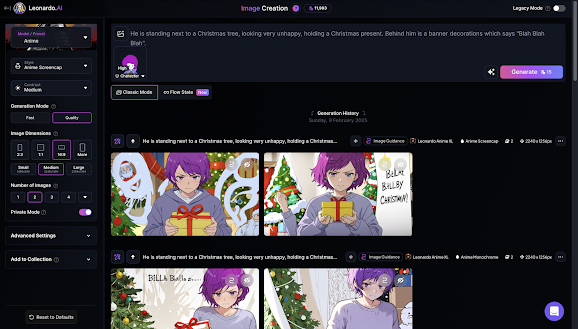
Leonardoai, Grok, Napkin, Sora, Co-pilot and Perplexity have all disappeared from my EdTech stack this year. Why? One disappeared from existence (Sora), but the others seemed to be just duplicates of tools I was already using. Google Gemini becoming much more powerful and useful in the last year will no doubt continue to kill off a lot of other apps and platforms.
The Bigger Picture
The 2025-26 End-of-Year stack confirms something I suspected last year: the tools that stick are the ones that solve real problems I actually have, not the ones that promise to revolutionize everything. Yes, Kimi 2.6 smashed into my stack list from out of nowhere because it let me build something I couldn't have built alone. Final Cut Pro too - because it made something I do every week faster and better. FreeForm became a regular handy app for live-in-lessons, but also lesson presentation design work. Yet everything else pretty much stayed in its lane.
So, making great strides with just a few new platforms or apps within a school year feels like the right amount; manageable! Some new big hitters, but not enough to overwhelm. The way it should be.


Comments
Post a Comment